
- En stock
CHF6.00
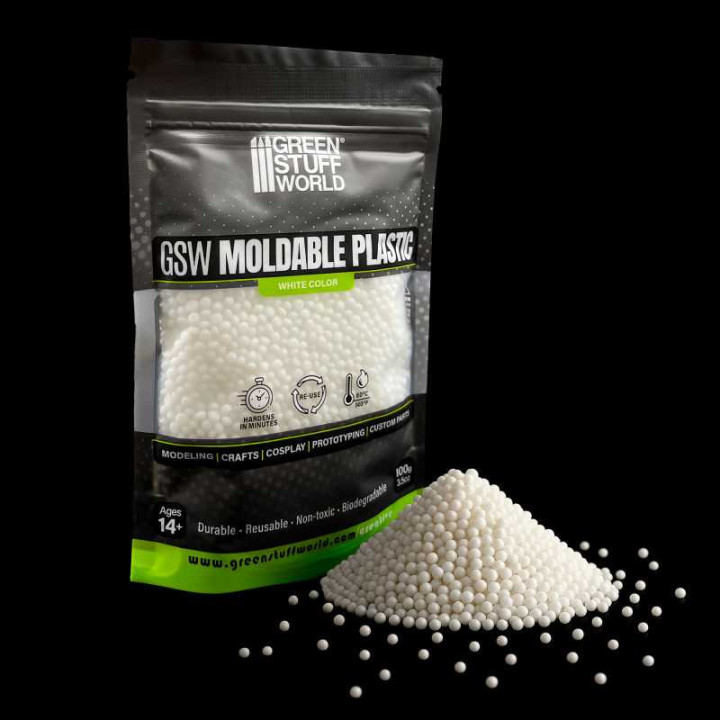
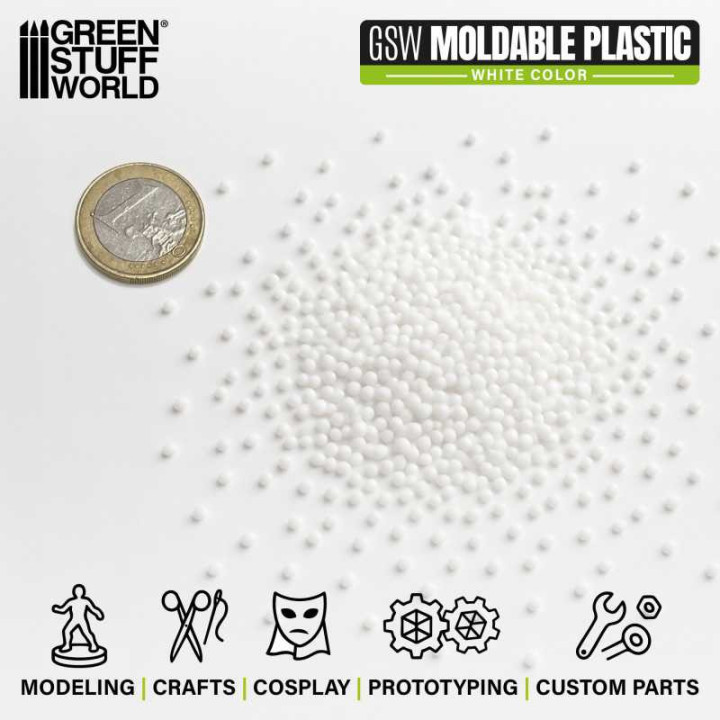
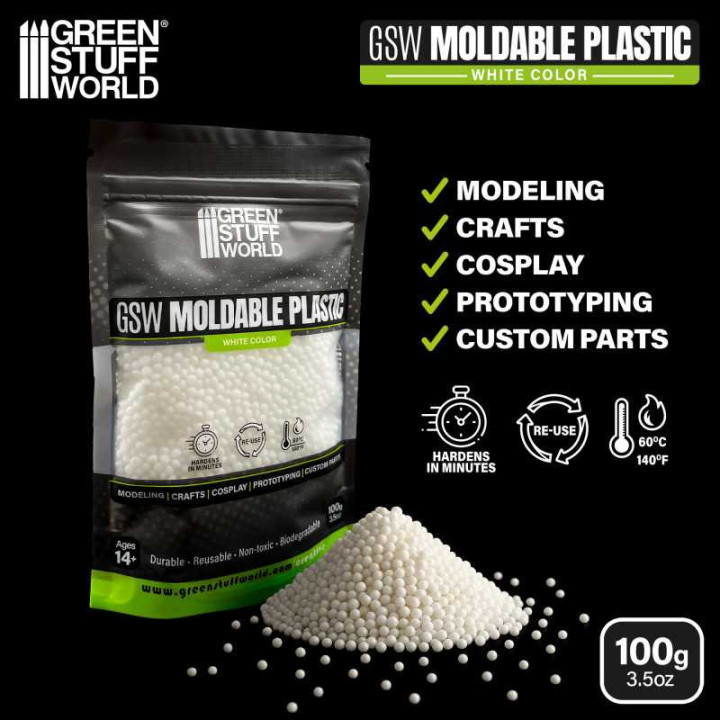
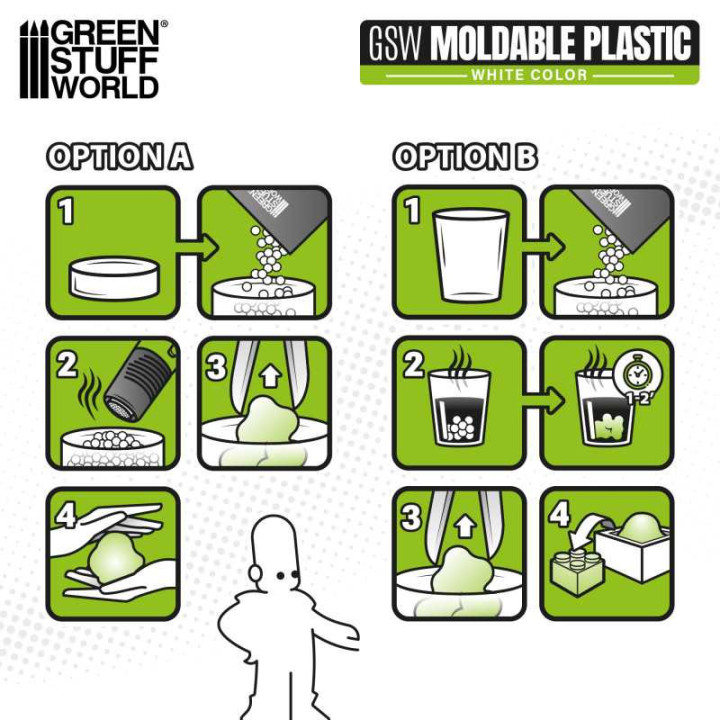
Plastique Thermoformable en granulés - Blanc 100 g images
What is moldable thermoformable plastic in pellets?
Thermoplastic pellets, sometimes called moldable plastic pellets or InstaMorph, are small granules made of a polymer that softens when heated and hardens when cooled, without undergoing chemical changes. Essentially, they behave like a reusable modeling clay: when heated above a certain temperature, the reusable polymorph pellets become malleable and can be shaped; when they cool down to room temperature, they solidify and take on a rigid form. This reversible phase change is characteristic of thermoplastics in general.
These thermoplastic pellets are made of a low–melting-point polymer plastic and are perfect for crafts, cosplay, small repairs, prototypes and dental or theatrical effects (like fangs) because of their ease of use, reusability and ability to capture fine detail.
This product does not take paint very well, which means it repels practically all paints. It is possible to paint pieces for use in a costume or cosplay prop, but keep in mind that the paint can be easily scratched if these pieces rub against something. It is preferable to airbrush them and always apply an acrylic primer to improve adhesion.
One of their most interesting characteristics is that once cooled, they are stable and retain their shape until they are reheated. This makes them ideal for repeated adjustments or reshaping.
How to melt the plastic pellets?
Melting plastic pellets is more about softening them than fully liquefying them: they are brought to a temperature at which they become translucent and malleable, but without reaching a completely liquid state (which could degrade the polymer). Once softened, they fuse together and can be easily worked.
The most common method is as follows:
Heat water or use a heat source: a safe and common method is to heat water (for example, in a saucepan or a heat-resistant container) to about 60–65 °C (140–150 °F).
Dip the pellets: place the reusable polymorph plastic in the hot water. As they heat, they become translucent, soften and begin to stick together. You can then remove them (with tongs or a spoon) before they melt completely.
Work quickly before they cool: once malleable, the reusable polymorph pellets can be molded by hand (using heat-resistant gloves), with a sculpting tool, molds, or even by pressing them against a surface or object to form details. Since working time is limited (they will begin to cool), plan the shape in advance.
Cool to solidify: after shaping the piece, let it cool (in the open air or at room temperature) until it becomes opaque white again. The cooling phase fixes the shape. At this point, the plastic becomes rigid and stable.
Reheat to make adjustments: if you want to readjust, reheat the piece in warm water or with a heat gun until it becomes malleable again, then reshape it.
Some users also use a hot air gun for small pieces, but direct application of heat requires more precautions to avoid overheating or charring. Always work with gradual, controlled heating and monitor the clarity of the plastic pellets to judge when they are malleable but safe.
How to use moldable rigid plastic to make fangs?
Using moldable thermoplastic pellets to create fangs for cosplay is a very popular application, especially for costumes, Halloween, or other theatrical effects.
Here’s how to proceed safely and reliably:
Shape the basic fangs: after melting the plastic pellets as described above, form small elongated shapes that roughly mimic the shape of fangs (conical "tooth" shapes). Work with small amounts so you can maintain control and details.
Create a mount: many fang designs include a small ledge that rests on the natural tooth to help secure the piece. You can press the softened moldable thermoplastic onto a temporary model or directly against a mold, or even against your own tooth. Remember that pieces can be cut and sanded with tools to achieve tapered shapes.
Attach them to your natural teeth (temporarily): once the shape is ready, heat a small amount (or reheat the base) and press the fang against your natural tooth (or a safe dental guard) so it fits well. Hold it in place until it cools and sets. Some users add a bit of denture adhesive to improve grip. Of course, this is a cosmetic, temporary product intended for events, performances or photos, and not for prolonged use. Several DIY guides and community forums describe this method.
Test the fit and comfort: before considering them finished, try the canines to see if they fit well, allow you to speak comfortably and whether they move. Since thermoplastics can be reheated and adjusted, you can remold those that don't fit perfectly. The result is a fang the same color as the rest of your teeth, which holds reasonably well for short periods (especially if worn in dry conditions and without eating).
How do you remove the moldable plastic from the teeth?
Removing fangs or veneers made from thermoplastic pellets is generally easier than applying them, because the pellets become malleable again with heat.
Here is a step-by-step removal strategy:
Rinse with warm water: the simplest method is to take a cup of very warm (but not boiling) water, hold it in your mouth and let the heat gently penetrate the interface between the moldable plastic and the tooth. The heat softens the thermoplastic and helps detach it. Many users report that the piece "comes off" with minimal force once softened.
Pry or twist gently: after heating, turn, slide or push the piece gently with a finger or a safe instrument (for example, a toothpick or a soft tool). As the pellet softens, it should give way without the need for sudden force.
Reheat locally (if necessary): if some edges remain stuck, you can apply a small amount of warm water to that area (for example using a syringe or dropper) to soften only that part, then remove it easily.
Cleaning and collection: once removed, clean the fabricated piece and the natural tooth (or underlying surface) with water and mild soap to remove any plastic or adhesive residue. Check for any residual fragments and, if necessary, use a warm rinse or gentle brushing to remove them.
Remolding or reuse: since the thermoplastic is reusable, you can remelt it in warm water and reuse it for future adjustments or modifications.
It is possible to remove this type of appliance without damaging the underlying tooth, provided you do so carefully, avoid applying excessive force, and ensure the warming is moderate (not high enough to melt or degrade the base tooth or any dental work).
Important safety note:
This moldable thermoplastic is not designed for prolonged oral contact and should only be used temporarily for costume or cosplay purposes. It is strongly recommended:
Limit the duration of use: avoid keeping these small plastic pellets or molded fangs in your mouth for long periods.
Do not eat or drink hot food or beverages while wearing them, as heat can soften the plastic and cause deformation.
Maintain proper hygiene: always clean your teeth and the thermoplastic piece before and after use to avoid bacterial buildup.
Choking hazard: since small molded pieces can come loose, there is a serious risk of choking if they are ingested.
Not recommended for children under 14 years old: adult supervision is required for safe handling and use.
For safety reasons, this reusable thermoplastic material should be considered only as a cosmetic or temporary modeling material, and not as a dental product or a substitute for professional dental appliances.
Le Mightium est notre programme de fidélité gratuit. Tu gagnes 1 point Mightium par tranche de CHF 10.– d’achat, en ligne comme en boutique.
100 points = CHF 5.– de réduction sur ta prochaine commande. Les points sont crédités dès l’expédition et n’expirent pas pendant 24 mois.
Profite aussi d’offres anniversaire et d’avant-premières réservées aux membres.
Comments (0)
Your review appreciation cannot be sent
Report comment
Report sent
Your report cannot be sent